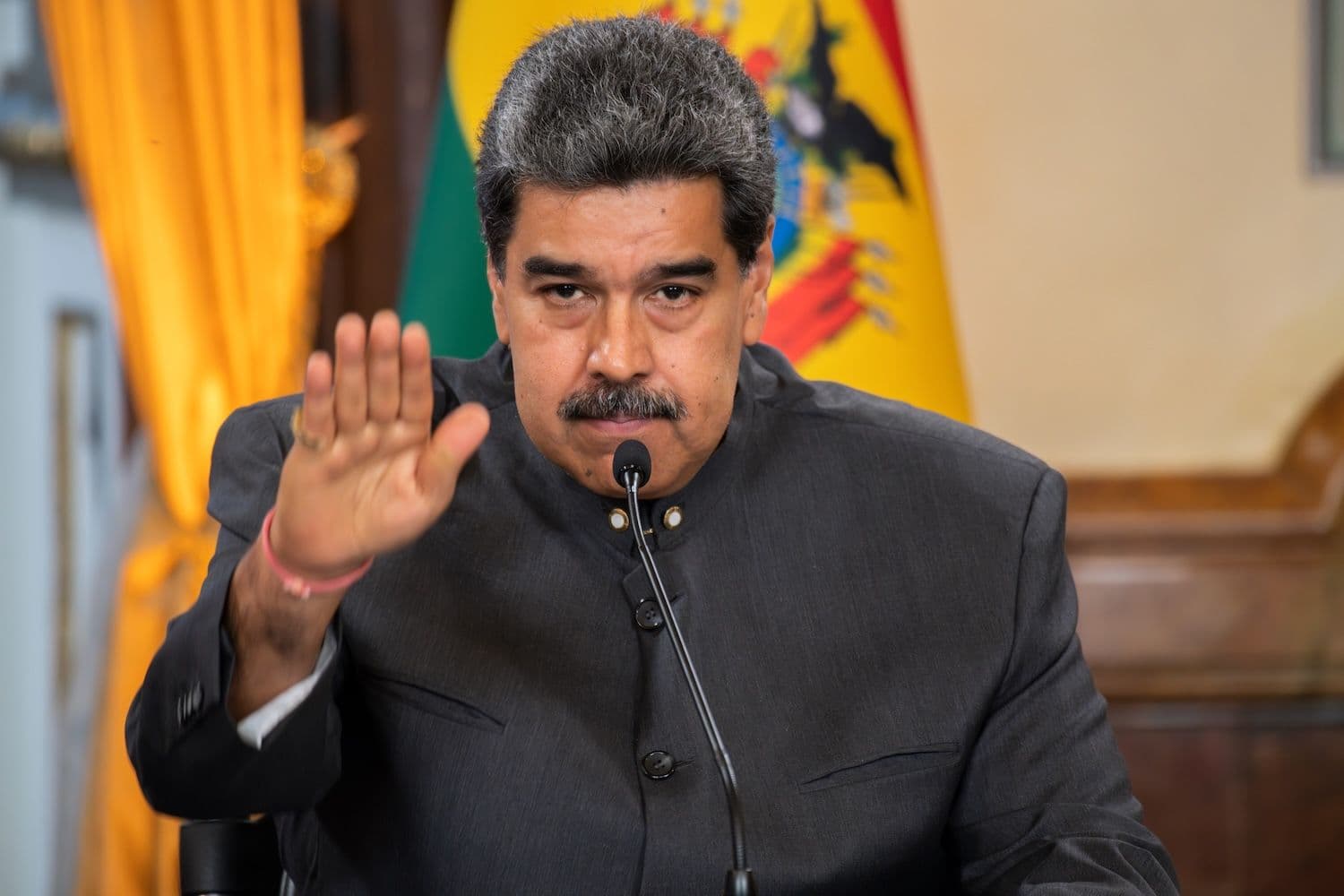
Venezuela’s equity market has surged sharply in the weeks following the capture of President Nicolás Maduro, as investors rapidly reprice the country on expectations of political change and potential sanctions relief rather than any improvement in economic fundamentals.
According to data highlighted by The Kobeissi Letter, Venezuela’s stock market has risen roughly 73%t since Maduro was taken into custody.
The rally accelerates further when measured from December 23, when pressure on the Maduro government intensified, with the market up approximately 148% over that period.
The magnitude and speed of the move point to a speculative repricing driven by political expectations, not near-term changes in growth, earnings, or macro stability.
Markets React To Political Shock, Not Economic Reform
The rally comes in the immediate aftermath of a dramatic political rupture.
Yellow.com previously reported that Maduro’s capture and transfer to U.S. custody marked a decisive break in Venezuela’s long-standing power structure, triggering a reassessment of sanctions, asset freezes, and the country’s future access to global capital.
Investors appear to be pricing in the possibility of a post-Maduro transition, including the eventual easing of U.S. and international sanctions that have isolated Venezuela’s financial system for years.
Equity markets, long constrained by political risk and capital controls, are responding to the sudden removal of a key uncertainty that has weighed on asset values.
Analysts note that such rallies often reflect forward-looking bets on regime change scenarios rather than confidence in current conditions.
Venezuela continues to face deep structural challenges, including inflation, infrastructure decay, and constrained access to foreign investment.
Also Read: Tim Scott Ties Crypto Regulation To Affordability Crisis, Senate Vote Set For Next Week
Sanctions And Capital Access At The Center Of The Repricing
The market move aligns with earlier coverage highlighting how Venezuela’s vast oil and natural gas reserves could regain strategic relevance if political conditions shift.
Equity investors appear to be positioning for a scenario in which Venezuelan assets are re-integrated into global markets, unlocking value that has been trapped by years of sanctions and governance risk.
Since late December, when President Donald Trump ramped up pressure on the Maduro government, expectations around sanctions enforcement and future policy direction have intensified.
Markets are now acting on the assumption that Venezuela’s political trajectory has changed materially, even as formal transitions remain uncertain.
A Fragile Rally Driven By Expectations
Veteran market observers caution that rallies tied to political inflection points are often volatile.
While the removal of a long-standing political constraint can trigger sharp repricing, sustained gains typically require concrete steps such as legal reforms, credible governance frameworks, and clear timelines for sanctions relief.
For now, Venezuela’s stock surge reflects how quickly capital can reposition when entrenched political risk is disrupted.
It also highlights how heavily Venezuelan assets had been discounted due to governance and sanctions, rather than purely economic considerations.
The broader takeaway is that markets are moving faster than politics.
Equity prices are already trading on a post-Maduro narrative, even as Venezuela’s institutional and economic future remains unresolved.
In that sense, the rally is less a verdict on recovery and more a real-time measure of how central political risk has been to Venezuela’s valuation and how swiftly that risk is being repriced following Maduro’s capture.
Read Next: MSCI Pauses Bitcoin Company Exclusion, Preventing Forced Selling Wave From Passive Funds