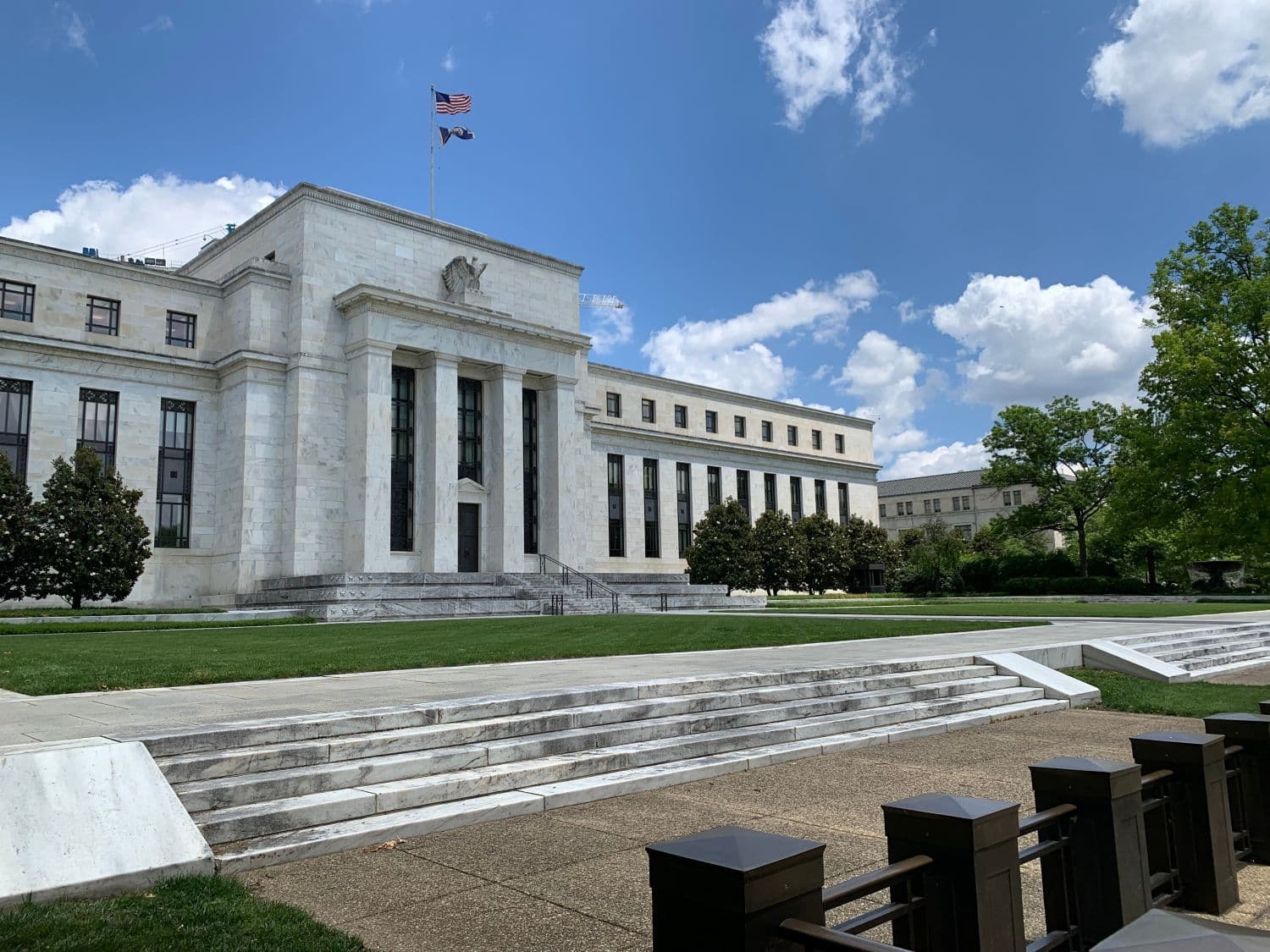
President Trump formally transmitted Kevin Warsh's nomination to lead the Federal Reserve to the Senate on Wednesday, triggering a confirmation process that will determine who chairs the world's most influential central bank when Jerome Powell's term expires in May.
For cryptocurrency markets, the outcome carries direct implications: Warsh is a known monetary hawk whose initial nomination in January sent Bitcoin (BTC) down to roughly $78,000 before stabilizing near current levels around $73,000.
The nomination covers a four-year term as Chair and a 14-year seat on the Fed's Board of Governors beginning February 1, 2026. It now moves to the Senate Banking Committee, chaired by Sen. Tim Scott, for hearings and a confirmation vote.
Who Warsh Is
Warsh, 55, served on the Federal Reserve's Board of Governors from 2006 to 2011, playing a senior role during the 2008 global financial crisis.
He subsequently became a fellow at Stanford University's Hoover Institution, where he has written extensively on central bank credibility and the long-term risks of balance-sheet expansion.
He is widely regarded as an inflation hawk who favors higher real interest rates and a smaller Fed balance sheet - a combination historically associated with reduced liquidity for risk assets including Bitcoin.
His prior opposition to quantitative easing during the Obama era has been cited by analysts as a potential headwind for digital asset markets.
Read also: Keyrock CEO: Bitcoin Is Mispriced, But 2027–2028 Is When Digital Finance Gets Real
What It Means for Crypto
Warsh's views on digital assets are more nuanced than his monetary policy reputation suggests. He has described Bitcoin as "an important asset that can help inform policymakers" and called it "the new gold" for investors under 40.
He has also previously invested in the algorithmic stablecoin project Basis and served as an adviser to Bitwise Asset Management and Electric Capital.
Still, his hawkish rate outlook is the primary concern for crypto investors. When the nomination broke in late January, Bitcoin ETFs saw nearly $1 billion in single-day outflows as leveraged positions unwound.
Analysts at the time noted that higher real interest rates raise the opportunity cost of holding non-yielding assets, compressing the liquidity that has historically supported cryptocurrency valuations.
Warsh cannot unilaterally set policy - rate decisions require a majority FOMC vote - but his leadership of the committee and public signaling would carry significant weight. The confirmation timeline remains open; Powell's term ends May 15.
Read next: Coinbase Lists LMTS Token - But It Also Funded The Project That Created It