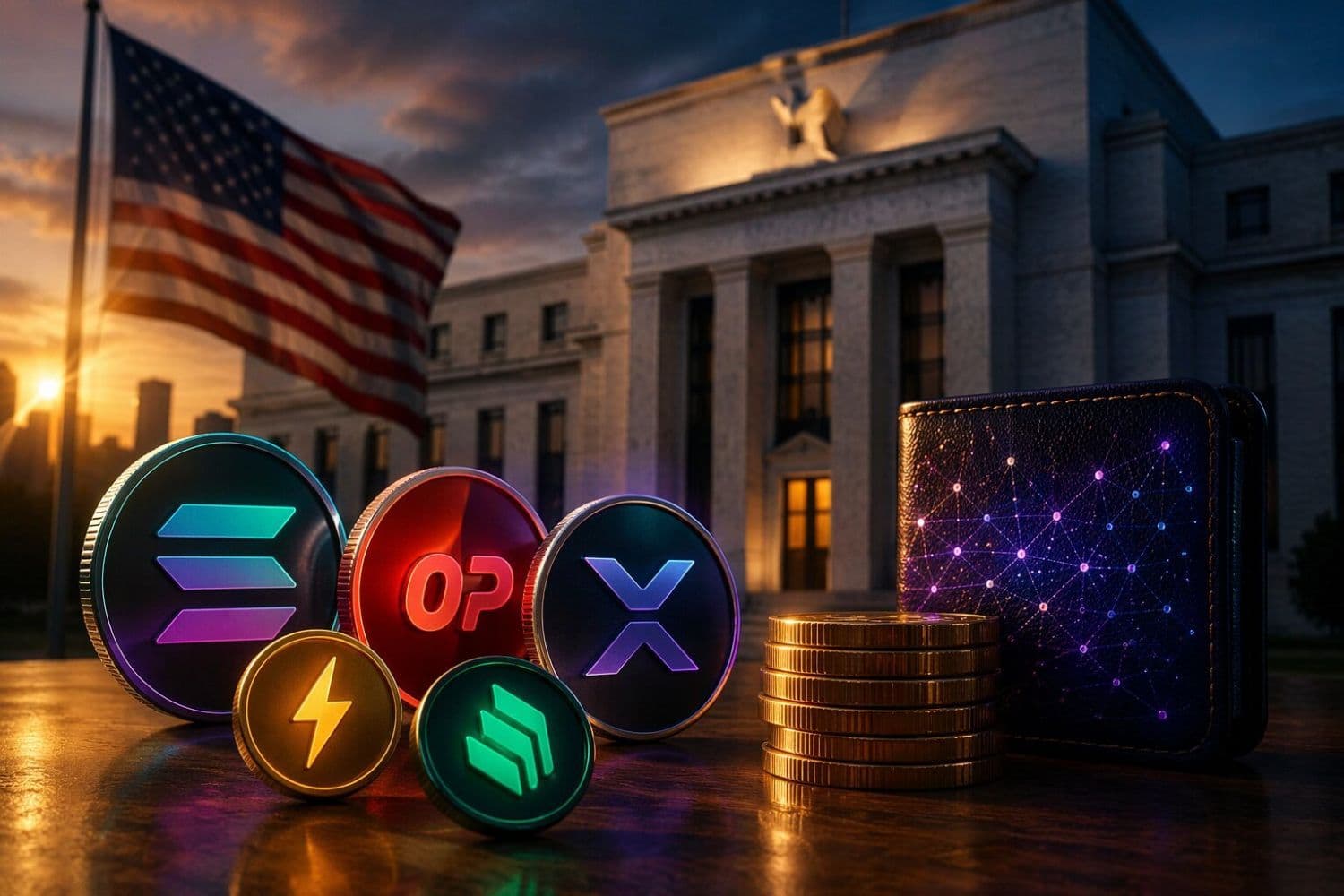
When Kevin Warsh filed his financial disclosure with the US Office of Government Ethics this week, it contained something no Fed chair nominee in American history has ever disclosed- a sprawling portfolio of cryptocurrency investments, including stakes in a DeFi derivatives platform, two Layer 1 blockchain networks, a leading crypto venture fund, and more than 20 other digital asset entities.
Warsh, President Donald Trump's nominee to replace Jerome Powell as chair of the Federal Reserve, listed indirect holdings in Solana (SOL), Optimism (OP), the Lightning Network, dYdX (DYDX), Polychain Capital, Compound (COMP), Dapper Labs, and over a dozen other Web3 projects.
His confirmation hearing before the Senate Banking Committee is scheduled for April 21. If confirmed, he would be the first person to lead the world's most powerful central bank while having personally bet on the future of decentralised finance.
What the Federal Reserve Actually Does And Why It Matters For Crypto
The Federal Reserve sets interest rates. That single sentence carries more weight for crypto markets than almost any other in finance. When the Fed raises rates, borrowing becomes expensive, investors move away from risk assets, and Bitcoin tends to fall.
When the Fed cuts rates, liquidity expands, risk appetite returns, and crypto historically rallies.
But the Fed chair's influence goes beyond rate decisions. The chair testifies before Congress, signals policy direction in speeches, and shapes how America's central bank thinks about financial innovation, digital money, and systemic risk.
A chair who has personally lived inside DeFi protocols, who understands what a Layer 2 network does, and who has backed crypto venture capital, is categorically different from every chair who came before him.
What's Actually Inside His Portfolio
Most of Warsh's crypto positions sit within venture fund vehicles, specifically AVGF I and DCM Investments 10 LLC, whose individual line items, under federal ethics rules, are reported without dollar values. That means each holding is worth less than $1,000 in individual exposure. These are not concentrated bets. They are the kind of small, diversified venture stakes common among Silicon Valley-adjacent investors who backed early-stage Web3 projects over the last few years.
The names on the list, however, are far from obscure.
Solana is one of the largest blockchain networks in the world by transaction volume. dYdX is one of the most widely used decentralised derivatives platforms. Polychain Capital is among the most influential crypto venture firms in existence. Optimism is a leading Ethereum scaling solution. These are not fringe positions, but stakes in infrastructure that tens of millions of people use daily.
Why He Has To Sell And What The Law Actually Says
Federal ethics law requires all senior officials to divest financial interests that could create a conflict with their official duties. Warsh has pledged in his filing to divest all crypto-linked holdings if confirmed. Once he does, however, the story does not end there.
Also Read: NEAR's Biggest DeFi Protocol Rhea Finance Bleeds $7.6M In Fake-Token Oracle Attack
Federal ethics rules impose a one-year cooling-off period, during which he would need to recuse himself from any matter that could directly and predictably affect his recently sold assets.
That creates a paradox as the next Fed chair may know more about how DeFi protocols function than any of his predecessors and he would be legally prevented from acting on that knowledge for the first twelve months of his tenure.
What It Could Mean For Bitcoin Prices
Warsh's monetary policy instincts are not straightforwardly bullish for crypto. During his years on the Fed board, he consistently argued for tighter policy, smaller balance sheets, and higher real interest rates, positions that have historically created headwinds for speculative assets including Bitcoin. He opposed quantitative easing in 2010 on the grounds that it would inflate asset bubbles.
More recently, however, he has aligned with Trump's push for lower rates, arguing the Fed can reduce borrowing costs without reigniting inflation. That nuance matters. A chair who tightens the balance sheet while cutting short-term rates creates an environment that could structurally favour Bitcoin's (BTC) store-of-value thesis, tighter money supply, lower cost of capital, higher credibility in the currency, over short-term altcoin speculation.
The crypto market's real bet on Warsh is not that he will be a cheerleader for DeFi. It is that a Fed chair who personally invested in the space will understand what he is dealing with, rather than fighting it from a position of ignorance.
What To Watch On April 21
Warsh's Senate Banking Committee hearing could surface important signals. Expect senators to press him on his crypto holdings, his divestment timeline, and how he intends to handle the recusal period. His answer will tell the market whether his personal history with digital assets translates into informed policy or whether he will wall off the topic entirely for the duration of his term.
There is also a complication sitting outside the crypto question entirely.
Senator Thom Tillis (R-NC) has threatened to block any Fed nominee until the Department of Justice drops its investigation into outgoing Chair Powell. If that standoff holds, Warsh's confirmation is not guaranteed and Powell remains at the helm through the uncertainty.
Read Next: Drift Lines Up $150M Tether Deal To Relaunch After $285M Hack