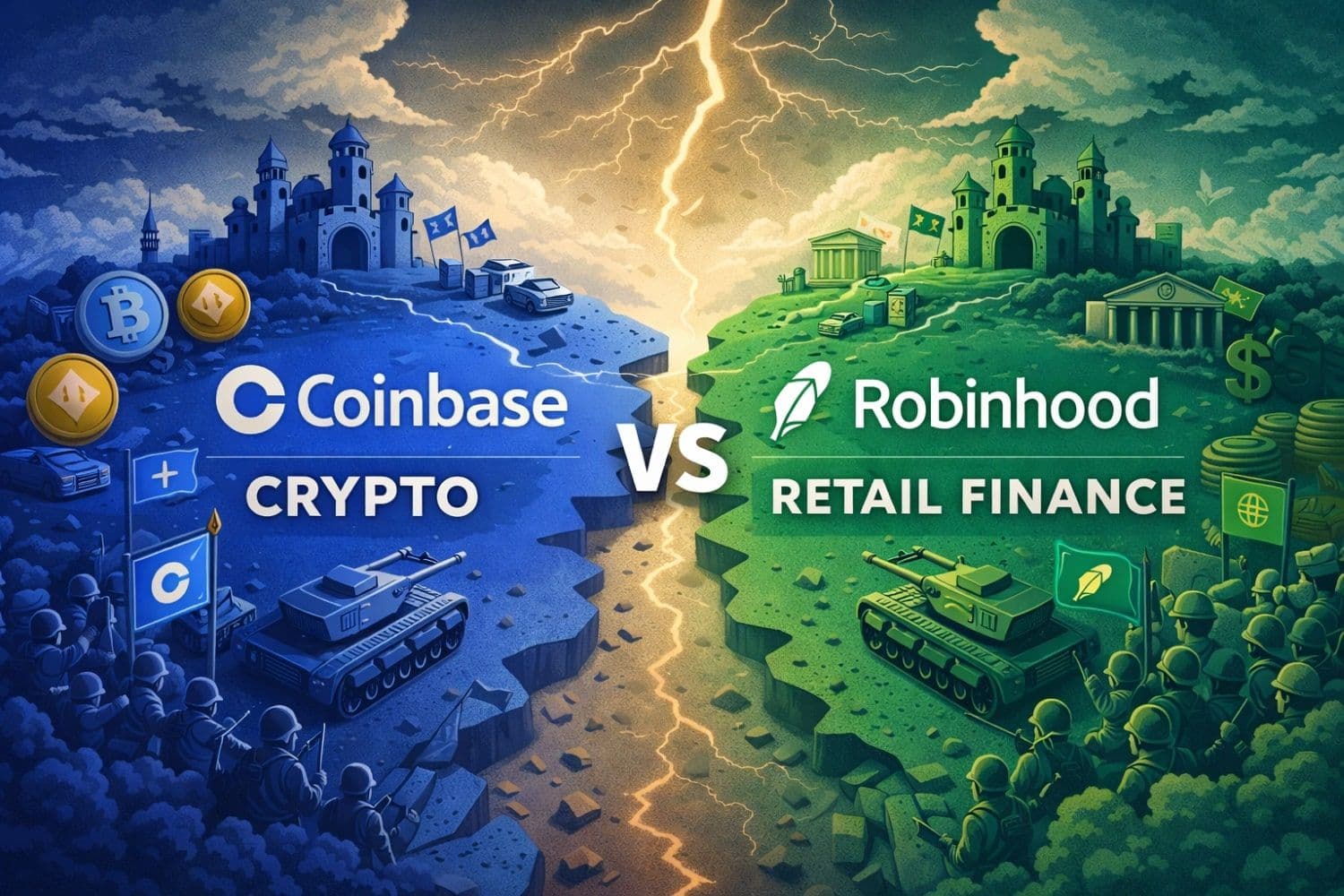
Brian Armstrong has outlined an expansive roadmap for Coinbase’s future, but the announcement has also exposed growing concern among traders and builders that the exchange may be losing focus as competition for retail finance dominance intensifies.
In a post on X, Armstrong said Coinbase’s top priorities for 2026 include building a global “everything exchange” spanning crypto, equities, prediction markets and commodities, scaling stablecoins and payments, and accelerating onchain adoption through Coinbase’s developer tools and its Base ecosystem.
He added that the company is making major investments in product quality and automation, with the stated goal of becoming the world’s number one financial app.
The strategy, however, immediately drew sharp criticism from parts of the crypto community, particularly around whether Coinbase is adequately responding to the growing threat from Robinhood, which has rapidly expanded its crypto and derivatives offerings.
Critics Warn Coinbase Is Underestimating Robinhood
Shortly after Armstrong’s post, crypto commentator ev fiend argued that Coinbase risks falling behind by failing to treat Robinhood as an existential competitor rather than a peripheral one.
“Robinhood has the retail that Coinbase wants, not the other way around,” ev fiend wrote, adding that Robinhood’s push into crypto, prediction markets and, potentially, perpetual futures positions it to become a one-stop financial platform for younger users.
He said Coinbase’s focus on Base and crypto-native social products risks missing the broader retail demand for an integrated app that combines trading, banking, payments and speculation.
Ev fiend also pointed to Robinhood’s willingness to aggressively expand into new verticals, saying the brokerage “has no hills to die on” and is willing to cannibalize existing products to capture user activity, a strategy he suggested Coinbase has been slower to adopt.
Builders Urge Sharper Focus And Frontend Dominance
Further criticism came from Mert Mumtaz, founder and CEO of Helius, who said Coinbase’s most important strategic battle is the fight to become the dominant “everything exchange,” an area where Robinhood already benefits from deep equities distribution.
In a separate post, Mumtaz argued that Coinbase should concentrate the majority of its resources on competing directly with Robinhood, rather than fragmenting efforts across too many initiatives.
He also suggested that Coinbase’s onchain strategy should lean into its strength as a distribution and frontend layer, integrating decentralized venues rather than attempting to vertically control infrastructure.
Mumtaz added that custody and payments remain important but should play a supporting role, while privacy, potentially through zero-knowledge compliance tools, could become a key differentiator if executed correctly.
A Strategic Inflection Point
Armstrong’s vision reflects a broader trend in crypto, where exchanges are converging with traditional finance platforms as digital assets move deeper into mainstream markets.
Coinbase has steadily expanded into derivatives, custody, payments and onchain infrastructure, while Robinhood has moved in the opposite direction by embedding crypto into an already large retail finance base.
The debate sparked by Armstrong’s post highlights a central question facing Coinbase as crypto adoption widens, whether building deeper crypto-native infrastructure will be enough to win the next generation of users, or whether success will depend on owning the primary consumer interface for everyday finance.
As Robinhood continues to roll out crypto-linked products and Coinbase pushes to broaden its scope beyond digital assets, the competitive gap between the two firms is increasingly being measured not by product availability, but by distribution, user behavior and strategic focus.
Read Next: Iran Is Now Accepting Crypto For Ballistic Missiles And Armed Drones