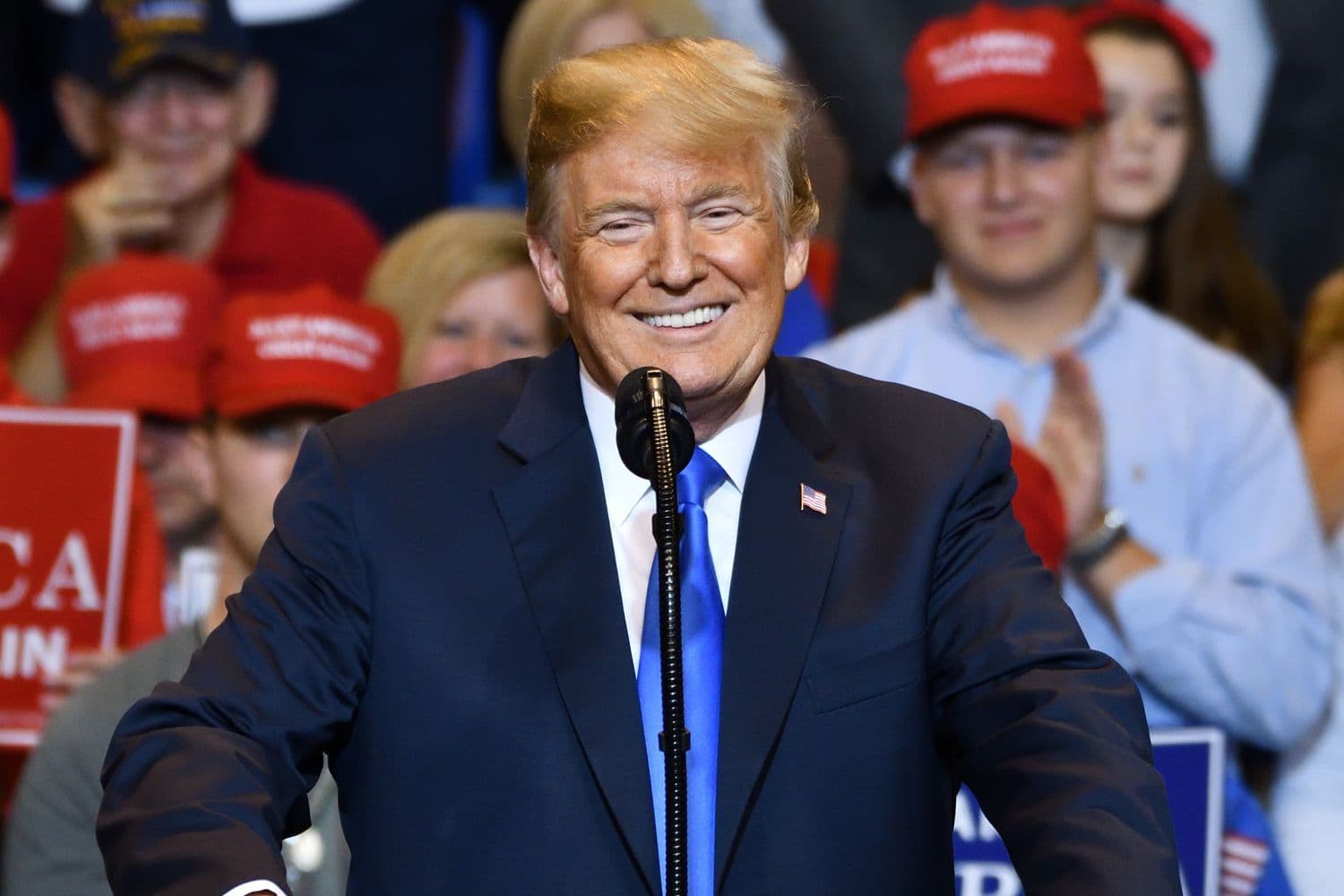
The Trump administration on Thursday declared America's golden age has arrived, marking the culmination of President Donald Trump's pivot from skeptic to industry champion, a transformation that has netted his family-linked firms $2.9 billion related to cryptocurrency ventures, with 40% of that figure held in crypto assets.
"Welcome to the golden age," The White House stated on Thursday.
The extraordinary wealth accumulation came as President Trump transformed from crypto skeptic to industry champion, delivering on campaign promises to reshape U.S. crypto policy while simultaneously profiting from his family's deep entanglement in digital asset ventures launched during his return to the White House.
The $2.9 billion windfall, detailed by the State Democracy Defenders Fund watchdog group, represents one of the most dramatic examples of presidential family enrichment in modern American history and raises sharp questions about conflicts of interest as the Trump administration positions itself as the architect of cryptocurrency industry's regulatory future.
Campaign Promises To Industry Action
During his 2024 presidential campaign, Trump courted the crypto sector with sweeping pledges that marked a stark reversal from his previous dismissals of Bitcoin (BTC).
Speaking at the Bitcoin 2024 conference in Nashville, Trump vowed to fire Securities and Exchange Commission Chair Gary Gensler "on day one," establish a strategic Bitcoin reserve, and transform America into the "crypto capital of the world."
"If we don't embrace crypto and Bitcoin technology, China will," Trump told the Nashville crowd. "If Bitcoin is going to the moon, I want America to be the nation that leads the way."
The administration moved swiftly after Trump's January 20, 2025 inauguration.
On January 23, he signed his first major crypto executive order directing federal agencies to establish industry-friendly oversight and explore a "digital asset stockpile."
The order banned central bank digital currencies and rescinded Biden-era policies that crypto advocates characterized as regulatory warfare.
Subsequent actions included creating the President's Working Group on Digital Asset Markets, establishing a Bitcoin reserve using previously seized assets, and issuing executive orders in August 2025 opening pathways for crypto investments in 401(k) retirement plans.
White House artificial intelligence and cryptocurrency adviser David Sacks in December said that lawmakers have scheduled the markup of the Clarity Act, a major bill aimed at establishing a regulatory framework for crypto markets, for January.
Personal Profits And Ethical Concerns
The Trump family's crypto enrichment began dramatically on January 17, 2025, three days before the inauguration, when the president launched the Official Trump (TRUMP) meme coin on the Solana (SOL) blockchain.
Also Read: Economist Says Republicans Must Answer For Trump Media’s $6B Merger Or 'Be Total Hypocrites'
The token exploded to a $15 billion market capitalization within hours, briefly reaching over $25 billion before collapsing.
According to blockchain analytics firm Chainalysis, Trump family-linked entities collected $320 million in fees from the token's trading activity through May 2025, even as the meme coin plummeted 87% from its peak.
The data showed the majority of retail investors who purchased the token lost money.
The launch drew immediate criticism from ethics watchdogs and crypto advocates alike, who questioned whether a sitting president should profit from digital assets while simultaneously shaping industry policy.
Trump's wife Melania compounded concerns days later by launching her own meme coin (MELANIA), which further diluted the TRUMP token's value.
The State Democracy Defenders Fund's analysis suggests the Trump family's crypto-related wealth extends far beyond meme coin fees, encompassing appreciation in holdings across various digital assets, with approximately $1.16 billion (40% of the $2.9 billion total) currently held in cryptocurrency form.
Market Reality Vs. 'Golden Age' Rhetoric
As 2026 opened, the cryptocurrency market's performance stood in sharp contrast to the administration's triumphalist rhetoric.
Bitcoin traded around $88,200 on January 1, down approximately 30% from its all time high of $126,080 seen on October 6 and well below the $100,000 psychological barrier many analysts had predicted for year-end.
Ethereum (ETH) languished at $2,986, while broader crypto markets faced headwinds from tax-loss harvesting, ETF outflows, and thin holiday liquidity.
Notably, precious metals surged to record highs in late December 2025, with gold and silver attracting capital that crypto bulls had hoped would flow into digital assets.
Market analysts at QCP Capital flagged the challenging environment saying, "Holiday-driven moves have historically tended to mean-revert, with price action often fading as liquidity returns in January."
The Trump administration's policy achievements, including pending market structure legislation and regulatory clarity for stablecoins under the proposed GENIUS Act, represent tangible progress for an industry that faced existential uncertainty under previous leadership.
Yet the president's family enrichment of nearly $3 billion from crypto ventures and the market's recent struggles highlight the gap between Washington's "golden age" messaging and the financial reality facing ordinary cryptocurrency investors entering 2026.
Bitcoin currently trades at $88,200, up 1% in the past 24 hours, while Ether stands at $2,986, gaining 0.54% over the same period, according to data from CoinGecko.
Read Next: Trump Mobile's 'American-Made' Phone Faces The Reality No U.S. Smartphone Can Escape