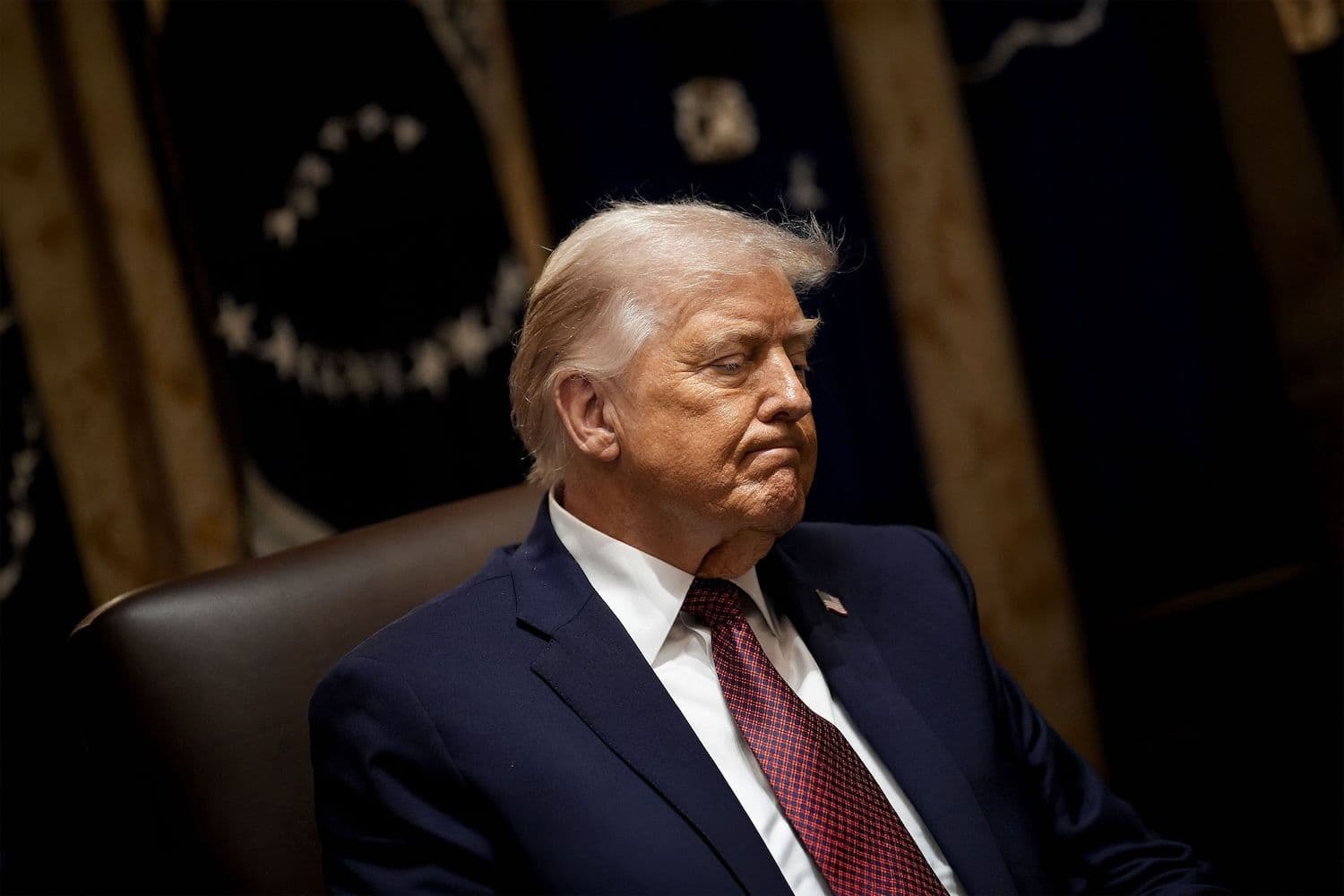
President Donald Trump publicly demanded that Congress pass the Clarity Act without delay on Tuesday, accusing major U.S. banks of attempting to undermine his administration's cryptocurrency legislation and warning them against holding the bill "hostage."
What Happened: Trump Demands Crypto Legislation
In a post on Truth Social late Tuesday, Trump called on lawmakers to advance market structure legislation for Bitcoin (BTC) and other digital assets immediately. "The U.S. needs to get Market Structure done, ASAP," Trump wrote.
The president accused major banks of threatening and undermining the GENIUS Act, a separate stablecoin bill his administration has championed.
"The Genius Act is being threatened and undermined by the Banks… and that is unacceptable — WE ARE NOT GOING TO ALLOW IT," Trump posted, framing the legislation as a necessary step toward making the United States the "Crypto Capital of the World."
Trump described the Clarity Act as the next critical piece of his crypto agenda. "Getting The CLARITY Act done is the NEXT STEP to finish the job," he wrote.
The Clarity Act would shift regulatory authority over most digital assets from the Securities and Exchange Commission to the Commodity Futures Trading Commission, classifying most cryptocurrencies as digital commodities rather than securities. Banks have opposed provisions in the broader legislative package that would allow crypto exchanges to pay yield on stablecoins, a move the banking industry views as a direct threat to traditional deposits.
Also Read: Dogecoin Falls Under $0.0950 With Bears Leading
Why It Matters: Regulatory Power Shift
The standoff between the White House and the banking industry reflects a deeper fight over who controls the rules governing digital assets in the United States. If passed, the Clarity Act would end years of jurisdictional confusion between the SEC and CFTC, giving exchanges and token issuers a single set of rules to follow.
The banking industry's opposition centers on stablecoin yield provisions.
If crypto platforms can offer interest on dollar-pegged tokens, traditional banks risk losing deposits to higher-yielding alternatives.
That competitive threat explains why institutions like JPMorgan have pushed back aggressively, with CEO Jamie Dimon recently arguing that yield-paying stablecoin firms should face bank-level regulation.
Trump's public pressure campaign adds a political dimension to what has been a largely technical regulatory debate. With the Treasury pushing for a resolution by spring, the timeline for action is narrowing.
Not all crypto industry figures support the legislation. Charles Hoskinson, founder of Cardano (ADA), called the Clarity Act a dangerous bill that would classify nearly all digital assets as securities by default, handing the SEC broad authority to restrict the industry for years.
In a Mar. 3 YouTube broadcast, Hoskinson delivered a technical critique of H.R. 3633, the Digital Asset Market Clarity Act of 2025. He argued the bill creates a "security by default" framework under which every new project — including protocols like XRP (XRP) and Ethereum (ETH) at the time of their launches — would fall under SEC jurisdiction as investment contract assets.
Read Next: Can Bitcoin Break $70K While Gold Stumbles?