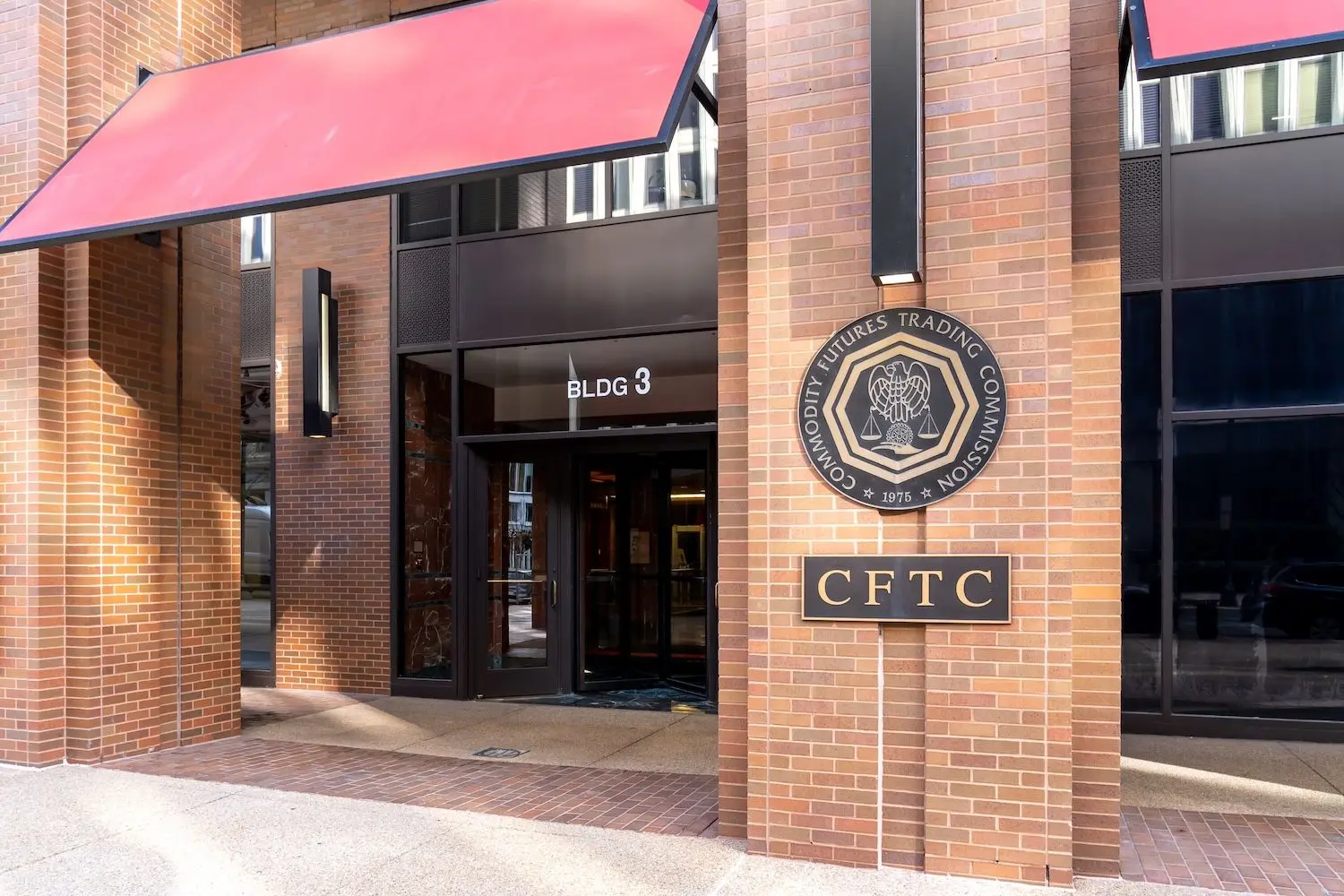
The CFTC's Market Participants Division and Division of Clearing and Risk published an 11-question FAQ Friday operationalizing how futures commission merchants and clearinghouses may use cryptocurrency as collateral in U.S. derivatives markets - filling in practical gaps left by two staff letters issued in December 2025.
The document is not a binding rule, but provides regulated firms their clearest framework to date for integrating Bitcoin (BTC), Ethereum (ETH), and payment stablecoins into margin and collateral structures.
The guidance builds on Staff Letter 26-05, which originated from a request by Coinbase Financial Markets working with clearinghouse Nodal Clear to use USDC as futures collateral.
It also aligns the CFTC's capital charge framework with the SEC's February 2026 broker-dealer haircut guidance - a deliberate signal of interagency coordination.
Capital Charges and What FCMs Can Do
FCMs holding proprietary positions in Bitcoin or Ether must apply a minimum 20% capital charge; payment stablecoins carry a 2% charge. 2
FCMs may use customer-posted non-security crypto assets - after applying those haircuts - to cover debit or deficit balances in futures and cleared swaps accounts. They may also deposit proprietary payment stablecoins as residual interest in segregated customer accounts.
However, FCMs may not deposit Bitcoin, Ether, or other non-stablecoin crypto assets as residual interest in those accounts.
Customer funds may not be invested in stablecoins - the existing permitted investments list under Commission Regulation 1.25 remains unchanged.
Read also: Strategy Holds 3.6% Of All Bitcoin
Uncleared Swaps and Clearinghouses
Crypto assets, including stablecoins, are ineligible as margin for uncleared swaps.
The only exception covers tokenized forms of assets already on the eligible collateral list, provided they carry identical legal and economic rights to their native equivalents.
Derivatives clearing organizations, by contrast, may accept crypto as initial margin for cleared transactions, subject to their own haircut-setting processes and monthly stress testing.
Onboarding Process
FCMs must file notice through the CFTC's WinJammer system before relying on the no-action letter.
During an initial three-month window, they may only accept Bitcoin, Ether, and payment stablecoins, must report significant cybersecurity incidents immediately, and must file weekly crypto holdings reports.
Those restrictions lift after the three-month period, allowing expansion to other eligible crypto assets.
Read next: UK Set To Block Crypto Donations