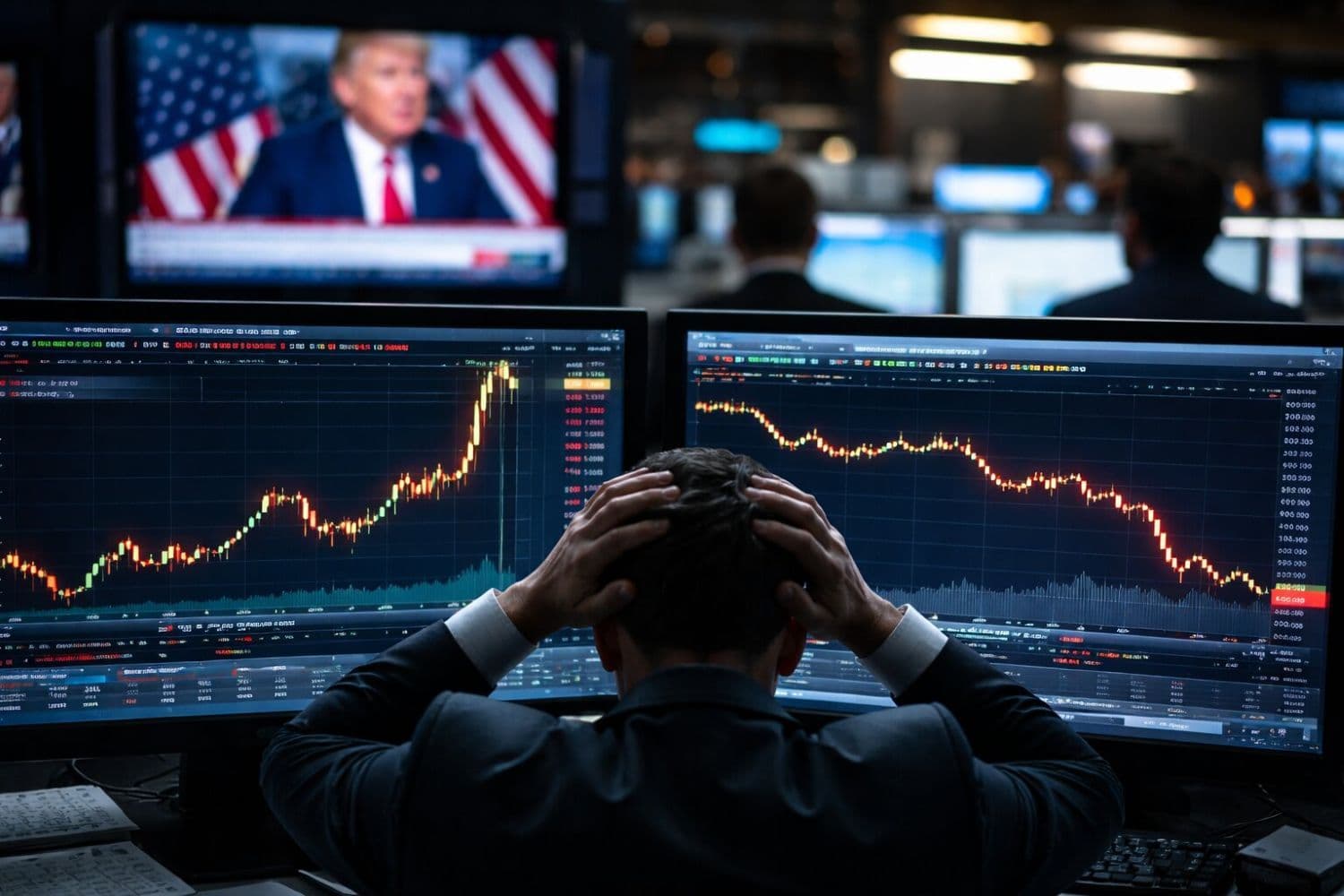
Unusually large futures trades placed minutes before a major geopolitical announcement have sparked allegations of potential insider trading, after market participants pointed to timing and scale that appeared closely aligned with U.S. policy developments.
According to data shared by the market-tracking account unusual_whales, approximately $1.5 billion in S&P 500 futures contracts were purchased while roughly $192 million in oil futures were sold just five minutes before President Donald Trump announced a halt to attacks on Iran.
The trades were reportedly four to six times larger than typical order sizes observed at that time.
The sequence of events has raised questions over whether the trades were informed by non-public information, given the immediate market reaction that followed.
Equity markets surged while oil prices dropped sharply, amplifying the gains from the positions taken moments earlier.
Trade Timing Fuels Insider Trading Concerns
The proximity of the trades to the announcement has drawn scrutiny from market observers, who say the precision of the positioning suggests foreknowledge of the policy shift.
The reported trades effectively anticipated both directions of market movement, buying equities expected to rally on de-escalation and selling oil ahead of a decline tied to reduced geopolitical risk.
Also Read: Larry Fink Says Tokenization Is Where The Internet Was In 1996
While no regulatory findings have been issued, the scale and timing of the activity have intensified calls for closer examination by authorities, particularly given the sensitivity of geopolitical information.
Social Media Reaction Highlights Public Outrage
Online reaction to the trades has been swift and sharply critical, with many users questioning whether the activity would face meaningful regulatory scrutiny.
Several commentators pointed to the narrow five-minute window between the trades and the announcement as evidence of possible information leakage.
Others described the activity as “front-running” a presidential statement, arguing that such behavior would typically trigger enforcement action in other contexts.
Some users contrasted the scale of the trades with how smaller retail-level infractions are often treated, suggesting a perceived double standard in enforcement.
Calls for investigation by regulators, including the U.S. Securities and Exchange Commission, were widely circulated across social media platforms.
The episode has also reignited broader concerns about transparency and fairness in financial markets, particularly when trades appear to coincide closely with government decisions that can move global asset prices.
Read Next: Core Scientific Raises $1B From JPMorgan, Morgan Stanley For AI Pivot